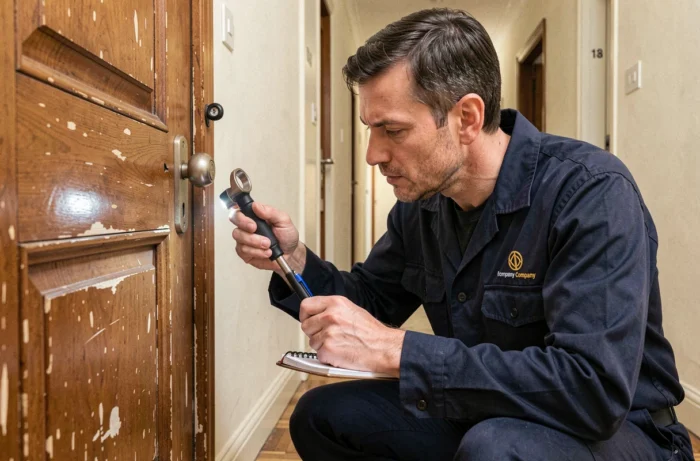
When a door slams or a lock fails, the price of a locksmith becomes an immediate concern. The price ranges displayed online vary from simple to triple for the same service, making any estimate difficult without understanding the actual pricing mechanics. The decree of January 24, 2017, which regulates home repairs, imposes specific rules on what a locksmith estimate must contain.
Obligation of locksmith estimates: what the law requires before any intervention
Most online comparisons focus on average prices. They overlook the legal framework that protects the customer long before the locksmith touches the door.
A written estimate is mandatory before the intervention, even in emergency situations. This document must detail the identity of the company, the exact nature of the work, the price of labor, supplies, travel expenses, any additional charges, and the total amount including tax. This requirement stems from the decree of January 24, 2017, applicable to home repair services, according to the Ministry of Economy.
The price grids published on tarif-serrurier.com provide an idea of the prices charged, but they do not replace the individualized estimate that the professional must provide on-site.
One point that field feedback regularly confirms: the locksmith cannot charge for additional work without a new written agreement. If a cylinder or lock replacement proves necessary when the initial estimate did not foresee it, the professional must obtain the client’s consent on a second estimate before proceeding. Urgency does not eliminate this obligation.
Locksmith pricing: the factors that affect the bill
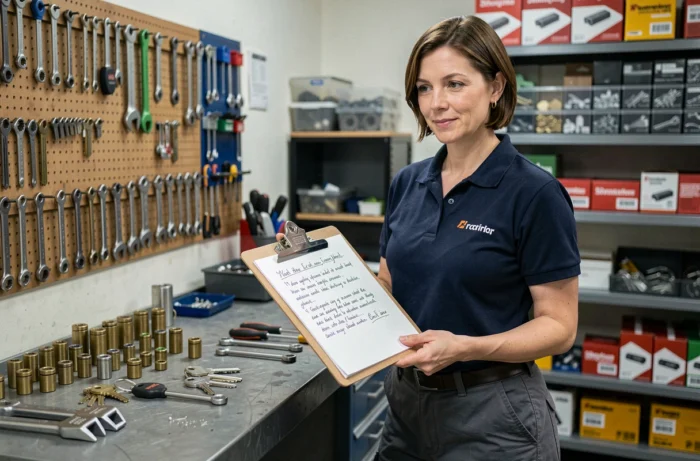
A locksmith bill is broken down into several distinct lines. It is their cumulative total, not a single price, that determines the final cost. Three factors concentrate most of the discrepancies.
Travel fees and time slot
Travel represents a fixed cost, charged regardless of the complexity of the work. During the day, this cost remains moderate. Charges for night, weekend, or holiday interventions can double or more this amount. These surcharges must be explicitly stated in the estimate.
Type of door and lock
A slammed door (not locked) is generally resolved without destroying the mechanism, which limits the cost. A locked door requires a more technical intervention. The type of lock also plays a role: a simple European cylinder costs significantly less to replace than a multipoint lock or a reinforced security system.
- Opening a slammed door (simple or armored): the least expensive intervention, often achievable without replacing parts.
- Opening a locked door: may sometimes require the destruction of the cylinder, adding the cost of the supply to the labor rate.
- Changing a multipoint or armored lock: the cost of the supply often exceeds that of labor, especially for A2P certified models.
- Installation of a connected or biometric system: a separate item, with very wide price variations depending on the brand and level of security chosen.
Supplies and level of security
The choice of materials weighs heavily. A standard cylinder and a high-security certified cylinder are not in the same range. The estimate must specify the brand and reference of each supply, allowing for price verification and comparison.
Recourse in case of overcharging or disputes with a locksmith
The locksmithing sector is not regulated in the sense that no specific diploma is required to practice. This peculiarity partly explains the pricing abuses documented by the DGCCRF.
The first reflex in case of doubt: the fourteen-day withdrawal period may apply if the professional was contacted outside of a strict emergency framework. For an intervention expressly requested in an emergency, this period may be shortened or waived, provided the consumer has given explicit consent on this point. The available data does not allow for a universal ruling, as each situation depends on the precise context of the request.
In the case of manifest overcharging, several avenues exist:
- Reporting on the SignalConso platform, managed by the DGCCRF, which records abusive practices and can trigger an inspection.
- Contacting a consumer mediator, whose contact details must appear on the invoice or the professional’s website.
- Recourse to the local court for disputes involving limited amounts, without the obligation to go through a lawyer.
Keeping the signed estimate, the invoice, and any written exchanges with the locksmith constitutes the basis for any action.
Realistic estimate of a locksmith’s price: what makes estimates comparable
Comparing two locksmith estimates requires checking that they cover exactly the same scope. A lower price may mask the absence of travel fees, supplies, or hourly surcharges.
For an estimate to be reliable, the estimate must isolate each item: travel, labor, supplies (with references), and any potential surcharges. An estimate that displays a total price without breakdown is not compliant with the decree of January 24, 2017.
Geographical location also influences pricing. The cost of living and the density of available professionals create notable discrepancies between large urban areas and rural zones, without it being possible to set a precise coefficient applicable everywhere.
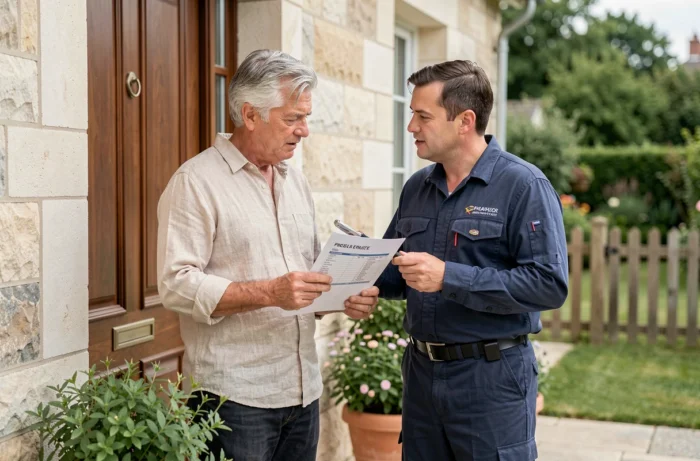
The most useful estimate remains the one obtained by requesting at least two detailed estimates for the same intervention, ensuring that each line corresponds to an identifiable item. The price of a locksmith is not read in a national average: it is read in the details of a compliant estimate, compared to a second one.