The clothing style relies on a set of technical choices: cut, material, proportions, color palette. Each decision influences the perceived silhouette and the durability of the worn pieces. The following ten tips target concrete actions, applicable without a specific budget, to enhance your outfits on a daily basis.
1. Roll up sleeves and hems to adjust proportions
A garment that is slightly too long (blazer sleeve, jean hem) weighs down the silhouette. Rolling up a shirt or jacket sleeve to the wrist creates a visual break that slims the arm and gives a more polished look.
The same principle applies to trousers. A cuff of two to three centimeters on straight jeans or chinos visually shortens the leg in a controlled manner while showcasing the shoe. Adjustment by folding often replaces a tailor’s alteration when the excess length remains modest.
By applying this technique, you can also consult Media Gaga’s fashion tips to explore other proportion adjustments for your outfits.
2. Check the environmental score before buying a trendy piece
Since October 1, 2025, brands can voluntarily display an environmental score on their clothing in France. This score takes into account materials, resource consumption, transportation, reparability, and the product’s end of life.
Comparing two similar pieces through this score allows for a purchase decision beyond just the price. A t-shirt priced a few euros less but poorly rated in reparability will cost more in the long run if it cannot withstand alterations or repairs.
Since September 1, 2026, a financial penalty affects products from ultra-fast fashion. The more a brand offers broad ranges without encouraging repair, the higher the additional cost, making durable pieces comparatively more advantageous.
3. Limit the palette to three colors per outfit
The chromatic coherence of a look relies on a simple rule: do not exceed three visible colors (excluding discreet accessories like belts or watches). Beyond that, the eye does not know where to settle, and the outfit loses readability.
In practice, choose a dominant color (pants or top), a secondary color (the other major piece), and an accent color (scarf, shoes, bag). Black, navy, and white work as neutrals that combine with almost any accent shade.
4. Choose the actual size rather than the desired size
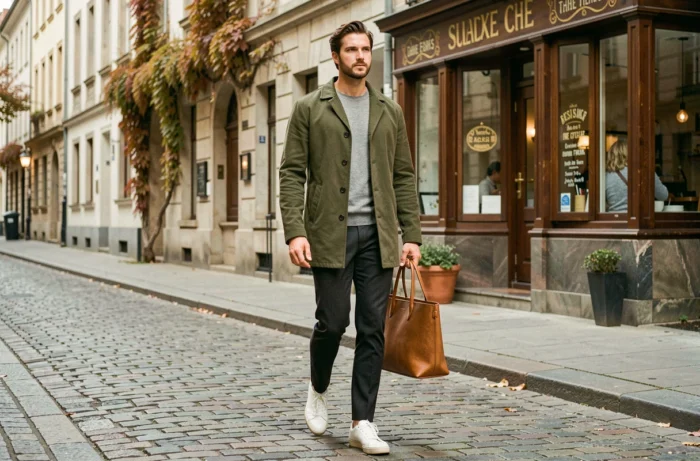
A garment that is too tight pulls on the seams, marks the fabric, and ages faster. A garment that is too loose gives the impression of being borrowed. The right size is one where the fabric falls without tension or excess.
For trousers, check that you can slide a flat finger between the waistband and your stomach. For a shirt, the shoulder seam should fall on the shoulder bone, neither above nor below. These markers apply to both men and women and do not depend on the brand.
5. Maintain shoes after each wear
Shoes are the first item the eye notices at the bottom of the silhouette and the first to betray a lack of care. A quick brush after each use removes dust and preserves leather or suede.
For leather shoes, a polish suitable for the shade every ten to fifteen wears is enough to maintain shine. For canvas sneakers, a wipe with a damp sponge prevents stains from setting in. Clean shoes elevate any basic outfit.
6. Master localized ironing on crease areas
Ironing a garment entirely takes time. Ironing only the collar, cuffs, and front of a shirt takes two minutes and produces an immediate visible result. These three areas are the ones that interlocutors see first.
On dress trousers, the central crease of the leg structures the silhouette. Keeping this crease sharp with an iron is enough to give a polished look, even if the rest of the fabric has slight ripples.
7. Match the belt to the shoes to unify the look
This rule works especially well in formal or semi-formal attire. Brown shoes, brown belt. Black shoes, black belt. The harmony between these two elements creates a continuous visual line that structures the outfit from top to bottom.
In casual attire (sneakers, jeans), the constraint relaxes. A canvas or woven belt can introduce an accent color without needing to match exactly to the shoe. The goal remains coherence, not uniformity.
8. Favor natural materials for close-fitting pieces
Cotton, linen, and wool regulate temperature and humidity better than pure synthetic fibers. On a t-shirt, shirt, or underwear, this advantage translates into better comfort throughout the day.
Since January 1, 2026, clothing containing PFAS is gradually restricted in France. These persistent substances, used for their waterproofing properties, were found in certain technical textiles. Checking the composition on the label becomes a useful reflex for both comfort and health.
9. Apply the one-third rule on layers
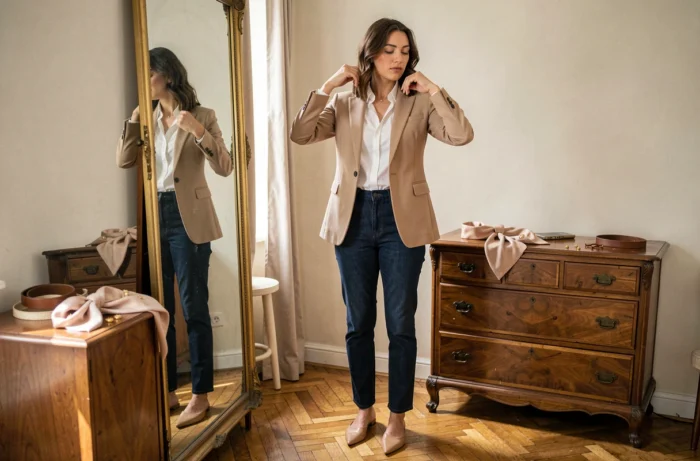
When layering two pieces (jacket over shirt, sweater over t-shirt), the piece underneath should extend about one-third of its visible length. This ratio avoids two pitfalls: the inner piece being invisible (unnecessary layering) or the inner piece being too long (sloppy effect).
On a men’s or women’s outfit with a blazer and shirt, this means that the collar and a few centimeters of the bottom of the shirt remain visible. This detail of proportion adds depth to the look without overloading it.
10. Check reparability before purchase
A replaceable button, a discoverable lining, accessible seams: these details determine whether a garment can be repaired or altered. A repairable garment lasts longer than a simply sturdy garment.
Specifically, before buying, turn the garment inside out. If the inner seams are neatly overlocked and the fabric has enough seam allowance, a tailor can intervene later. Thermo-bonded or fully glued pieces severely limit alteration possibilities.
- Check for the presence of spare buttons sewn onto the inner label or provided in a pouch.
- Prefer replaceable zippers over proprietary systems.
- See if the brand offers a repair service or dedicated care guides.
Clothing style is less about the quantity of pieces than about the precision of choices. A garment in the right size, well-maintained, repairable, and worn in a coherent palette produces a sharper effect than ten impulsive purchases. The French regulatory framework, with the environmental score and the penalty on fast fashion, now provides concrete tools to guide these choices right from the store or order screen.