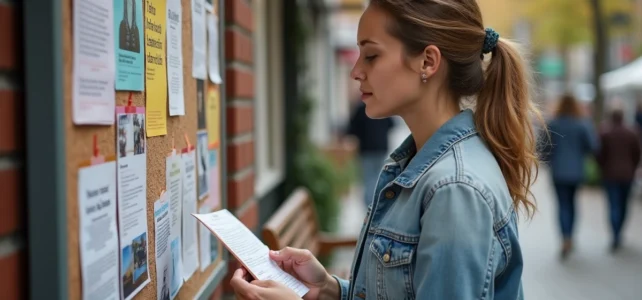
Keeping up with local news today requires a sorting effort that few people anticipate. Between neighborhood Facebook pages, municipal websites, community calendars, and mobile apps, sources of information about local events have multiplied without any one of them establishing itself as the unique reference. The result: missed outings, duplicates, and an information fatigue that drives many residents to give up searching.
Fragmentation of sources: the real obstacle to following local events
The problem is not the lack of information. French municipalities publish their schedules online, tourist offices maintain their own calendars, and associations communicate through their networks. The difficulty lies in the fragmentation of these flows.
A neighborhood festival may appear on an association’s Facebook page, on the town hall’s website, on a platform like Sortir Autour, and nowhere else. None of these sources systematically link to the others. For a resident simply looking for things to do this weekend near their home, this means checking three or four different sites before getting a reasonably complete view.
Aggregation platforms are trying to solve this problem. Tools like https://www.infolocale.be/ centralize events published by associations and local authorities, which reduces the number of sources to monitor. However, their coverage depends on the number of organizers contributing to the database, and this rate varies from one municipality to another.

Mobile apps and notifications: a useful filter but not sufficient
Several apps focus on discovering local activities. Meetup targets groups by interests (book clubs, sports, networking). Oniva sends a notification every Friday listing weekend outings around the user’s location, with a filter dedicated to free events. BeeHive and Somo offer similar approaches with different interfaces.
Targeted notifications replace active searching with passive monitoring, which suits those who want to be informed without effort. The time savings are real. However, these apps have limitations that one must be aware of before relying on them.
- Geographical coverage remains uneven: major metropolitan areas concentrate the majority of referenced events, while rural municipalities or medium-sized towns are less well served.
- Personal location data is continuously collected to feed recommendations, raising questions about how each app manages this data.
- Small-scale associative events (garage sales, neighborhood workshops, concerts in bars) often escape these platforms due to a lack of publication by the organizers.
No app covers all events in a given area. Cross-referencing at least two sources remains the only reliable method to avoid missing anything.
The role of municipal websites and local media in France
Municipal websites remain the most comprehensive source for institutional events: national holidays, markets, cultural activities funded by the community. The city of Tours, for example, publishes on tours.fr a calendar that covers both the festivities of July 14 and the month of biodiversity.
Field feedback varies on this point: some residents find these municipal calendars sufficient, while others consider them too focused on official events and unresponsive to current associative or private news.
Local online media fill part of this gap. Sites like Info Tours cover cultural news and offer weekly selections of outings. Local televisions (Val de Loire TV, for example) broadcast reports on upcoming events. These media add an editorial work that simple calendars do not provide: context, opinions, selections.
Local Facebook groups also play a significant role. Their functioning depends entirely on moderation and member activity, making them unpredictable. An active group in one municipality may be completely inactive in the neighboring municipality.
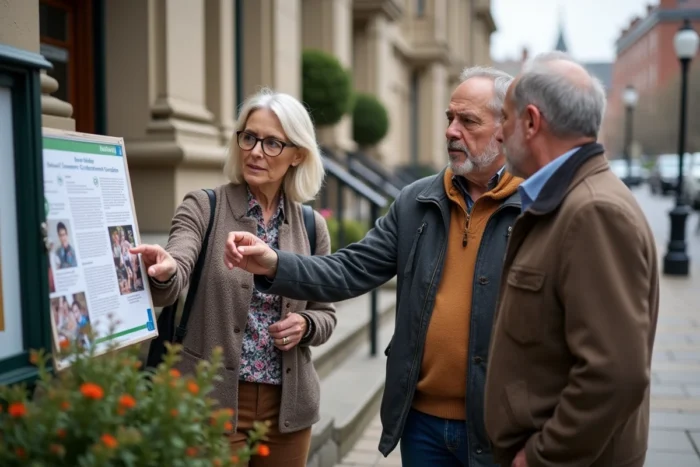
Building your own local monitoring: method and limits
Rather than seeking a single source, it is more realistic to build a personalized monitoring system combining two or three complementary channels. The logic is simple: an aggregator for the general flow, a local media for context, and an associative source for small events.
- Activate notifications from an events app (Meetup, Oniva, or equivalent) to receive a weekly reminder without any research effort.
- Check the municipal website’s calendar once a week for cultural and sports events organized by the community.
- Follow one or two local Facebook groups or neighborhood Instagram accounts to capture associative initiatives that do not appear on institutional platforms.
- Subscribe to a local media newsletter if it exists, to benefit from an editorial selection of upcoming outings.
This approach requires an initial setup of a few minutes, then operates almost automatically. The time spent on local monitoring drops to a few minutes per week once the sources are configured.
The available data does not allow for precise measurement of how many events still escape any online publication. Neighbor gatherings, informal workshops, and spontaneous initiatives largely remain off the digital radar. Word of mouth, as archaic as it may seem, continues to play a role that no platform has managed to completely replace.
Staying informed about local events near you is less about a miracle tool than about a pragmatic assembly of sources. The fragmentation of local information is a structural fact, not a temporary problem awaiting a technical solution. Adapting one’s monitoring habits to this reality remains, for now, the most effective response.