
Elsa Fourlon has become a familiar face for millions of viewers thanks to her regular presence on the show N’oubliez pas les paroles on France 2. A classically trained musician, she is proficient in guitar, cello, and harp. However, when it comes to her personal life, the silence is almost total. No interviews, no posts on social media document any potential family life or the presence of children.
Elsa Fourlon, classical musician turned pop-rock figure
Before appearing on Nagui’s set, Elsa Fourlon built a solid musical career. Her classical training allowed her to win a first prize at the conservatory. She then shifted to a pop-rock style, a turn that led her to collaborate with well-known artists from the French scene.
Among these collaborations are names like Vanessa Paradis, Laurent Voulzy, and Calogero. In 2012, she joined the group Circus, founded by Calogero. These experiences on stage and in the studio have shaped a versatile musician, capable of moving easily from one instrument to another. To better understand Elsa Fourlon’s private life and her children, one must first grasp how much her artistic career occupies public space, where the personal remains deliberately in the background.
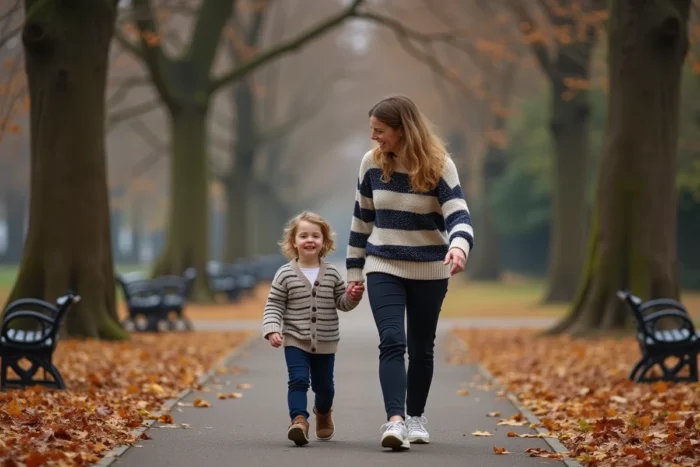
Elsa Fourlon’s private life: why no reliable source confirms her children
This is the question many internet users type into Google. And the answer deserves to be stated frankly: no primary source confirms the existence of children of Elsa Fourlon. No interview, no public statement, no photo shared on a verified social network.
Several online articles address the topic, but their content remains speculative. They rely on assumptions, not on solid biographical elements. Editorial caution is necessary here, because relaying unverified information about a public person’s family life poses a real reliability issue.
Identity confusion in search results
Another phenomenon muddles the waters. Searches related to “Elsa Fourlon” sometimes lead to pages discussing other artists named Elsa, or to unrelated topics. This mix of results in the SERPs fuels confusion and can create the impression that information exists when it pertains to another person.
Before believing an article that claims details about a celebrity’s private life, checking the source remains the most useful reflex. Content that cites neither date, nor statement, nor original media does not constitute evidence.
Television notoriety and respect for the privacy of recurring artists
Elsa Fourlon illustrates a broader phenomenon. Musicians, backing vocalists, and accompanists on entertainment shows occupy a unique place in the French audiovisual landscape. They appear weekly before millions of viewers, but their status is not that of a traditional media star.
Unlike guest singers or hosts, these recurring artists do not promote an album or a film. Their presence on screen is linked to a musical job, not to a personal communication strategy. Public curiosity naturally grows with television exposure, but the artist has no obligation to respond to this curiosity.
What French law protects
In France, the right to respect for private life applies to everyone, regardless of their notoriety. Appearing regularly on a France 2 show does not transform a musician into a public figure whose family life becomes a legitimate subject for media coverage.
This legal framework partly explains why artists like Elsa Fourlon share nothing of their intimate sphere. Silence about private life is a protected choice, not a mystery to be unraveled.

Musical journey of Elsa Fourlon: what truly deserves attention
Rather than searching for elusive information about her family, there is much to be interested in regarding what Elsa Fourlon shares publicly: her work. Her journey combines several dimensions that distinguish her in the French music scene.
- A complete classical training with a first prize from the conservatory, a rare foundation among television musicians
- An ability to play several instruments (guitar, cello, harp), allowing her to work across very different styles
- Collaborations with major artists in French song, from Calogero to Laurent Voulzy, which attest to a professional level recognized by her peers
- A regular presence on N’oubliez pas les paroles, a flagship show on France 2 hosted by Nagui, which has made her familiar to the general public
This journey showcases an artist whose legitimacy rests on concrete musical skills, not on a sought-after media exposure.
An artist of the stage above all
Public biographical profiles describe her as a stage and studio musician. It is this professional identity that defines Elsa Fourlon in the public space. Pages attempting to document her personal life merely reflect internet users’ curiosity, without providing verified content.
The boundary between what an artist shows on stage and what they keep private is nothing new. But with daily entertainment shows, this boundary is tested more often. Television recurrence creates a familiarity that resembles closeness, without being one. Elsa Fourlon appears weekly in French households, and this regularity is enough to fuel searches about her personal life, even when there is nothing to find.
Elsa Fourlon’s journey reminds us that television notoriety does not equate to consent for the exposure of one’s private life. What remains public is a solid musical talent and artistic collaborations that speak for themselves.