A man who wants to gain volume or length without waiting months for regrowth now has hair solutions that were once reserved for women. Hair extensions for men have become widely accessible, influenced by looks seen on social media and in the entertainment industry. However, it is essential to understand what lies behind the different techniques, their limitations, and the precautions to take before getting started.
Skin test and allergic risks: the often-overlooked starting point
Before even choosing a method of application, the first step concerns the skin. The glues used for adhesive extensions (tape-in) contain acrylates. These compounds can cause contact allergies: redness, itching, and sometimes swelling of the scalp.
Since 2024, vigilance around acrylates has increased in France. A preliminary skin test before the first application is still not emphasized by sellers. It is enough to apply a small amount of glue behind the ear or at the crease of the elbow, then wait 48 hours.
Keratin-based formulas pose a similar problem. When they contain aldehydes, preservatives, or fragrances, they can trigger irritative reactions in sensitive individuals. Persistent itching, localized redness: these symptoms should raise alarms. A serious professional hairdresser will systematically offer this test, and it is a good indicator of the salon’s quality.
To better understand hair extensions for men and their specificities, it is worth researching the components used during the application in advance.
Keratin, adhesive, or clip-in extensions: which technique for a man
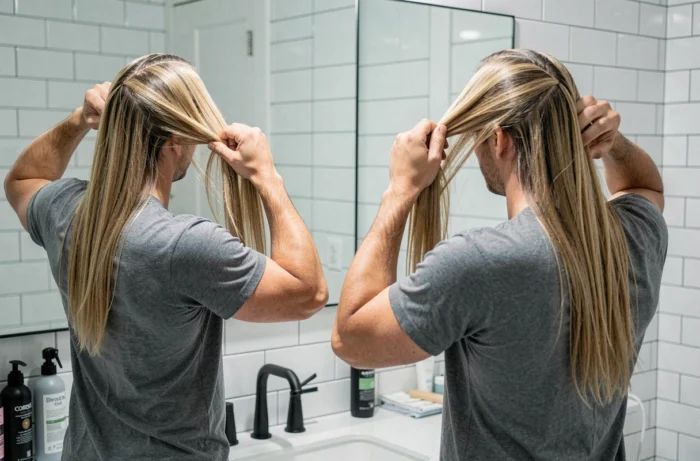
Have you noticed that men’s hair is often shorter on the sides and thicker at the roots? This characteristic changes the game compared to a classic female application. The choice of technique directly depends on the existing length and the desired result.
Keratin extensions
Strands are attached one by one at the root using a heated keratin bond. This method offers a natural look and lasts several months. It is suitable for men who have at least a few centimeters of length on the top of their head.
The application is lengthy (sometimes over two hours) and requires a hairdresser trained in this technique. The removal requires a specific solvent to avoid damaging the natural hair.
Adhesive extensions (tape-in)
Two adhesive strips sandwich a fine section of hair. The application is quicker, but the duration of hold is shorter, about four to eight weeks. This format is suitable for a man who wants to test a look without a long-term commitment.
The weak point: the glue does not withstand excessive sweating well. For a regular athlete, this is not the best option.
Clip-in extensions
Attached with small clips, they can be applied and removed in a few minutes. No commitment, no risk to the hair. The result remains less discreet, especially on short or fine hair.
- Keratin: long-lasting, professional application required, suitable for medium-length hair
- Adhesive: quick application, limited duration, sensitive to sweat
- Clip: removable, easy to apply alone, less natural on short hair
Natural or synthetic hair: a choice that changes everything
The quality of the extensions largely depends on the material. Natural hair extensions can be styled, washed, and colored just like your own hair. Synthetic fibers, which are cheaper, have a stiffer appearance and do not handle the heat from a hairdryer or straightening well.
For a man, the criterion of discretion weighs heavily. A natural hair strand of European origin will blend better with similarly textured hair. A synthetic hair strand may shine artificially under certain lighting, which immediately betrays the application.
Why does this choice matter so much? Because on often short men’s cuts, each strand is more exposed to view. A low-quality extension can be spotted in seconds, especially at the temples and nape of the neck.

Daily maintenance and lifespan of men’s extensions
Getting extensions does not exempt one from adapting their hair care routine. Proper care extends the hold and preserves the natural hair underneath.
- Use a sulfate-free shampoo to avoid dissolving the keratin or adhesive bonds
- Avoid vigorously rubbing the scalp in the application areas
- Dry at a moderate temperature, especially for adhesive extensions sensitive to heat
- Gently brush with a soft-bristle brush, starting from the tips to the roots
Regular maintenance in the salon every few weeks allows for repositioning extensions that have slipped with regrowth. Without this follow-up, the bonds slide down and become visible.
The lifespan varies depending on the technique. Keratin extensions generally last several months before removal. Adhesive ones require more frequent replacement. Clip-ins last as long as the fiber remains in good condition, sometimes over a year for well-maintained natural hair.
Budget and choice of hair salon for a male application
The cost of applying extensions for men depends on the technique, the number of strands, and the quality of the chosen hair. Natural hair extensions are significantly more expensive than synthetic ones, but their appearance and longevity often justify the difference.
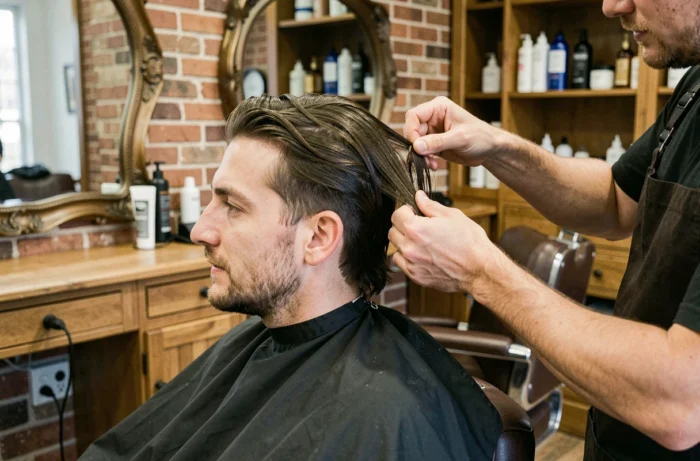
Not all hair salons master male applications. The density of the hair, the implantation, and the short cut on the sides require specific expertise. Before making an appointment, check that the professional has already performed applications on men and ask for photos of results.
Since 2024, the DGCCRF has been more centrally supervising the compliance of cosmetic products used in salons, including glues and keratins for extensions. A reputable salon will be able to inform you of the exact composition of the products applied to your scalp.
The choice of male hair extensions rests on three pillars: a technique suitable for the existing length, quality material that blends with natural hair, and regular professional follow-up. Neglecting any of these three points exposes one to a visible result or damage to the original hair.