
When you shout “hands up, rabbit skin” in a schoolyard, the reaction is almost automatic: arms go up, laughter erupts, and everyone continues with the next part without thinking. This nursery rhyme is part of the formulas that the French collective memory retains without an instruction manual. Its lyrics, passed down orally for decades, have never had a fixed official version.
As a result, there are numerous variants, which is an integral part of its charm.
Rabbit skin: an expression adapted by schoolyards
Associated with “hands up,” the phrase borrows from the register of robbery or heist. One imagines a western bandit, a noir film thug ordering his victim to raise their arms. The contrast between the threatening register and the childlike context creates an immediate comedic effect, and it is precisely this contrast that has allowed the nursery rhyme to endure.
Diving into the story behind hands up rabbit skin, we see that this mechanism of adaptation is typical of French nursery rhymes: taking an adult register (war, slang, threat) and transforming it into a rhythmic game for children.
The result is a formula that works sonically long before it works in terms of meaning. Children do not wonder why we talk about rabbit skin. They remember the rhythm, the rhymes, and the gesture of hands in the air.
Lyrics of hands up rabbit skin: why no version is authoritative
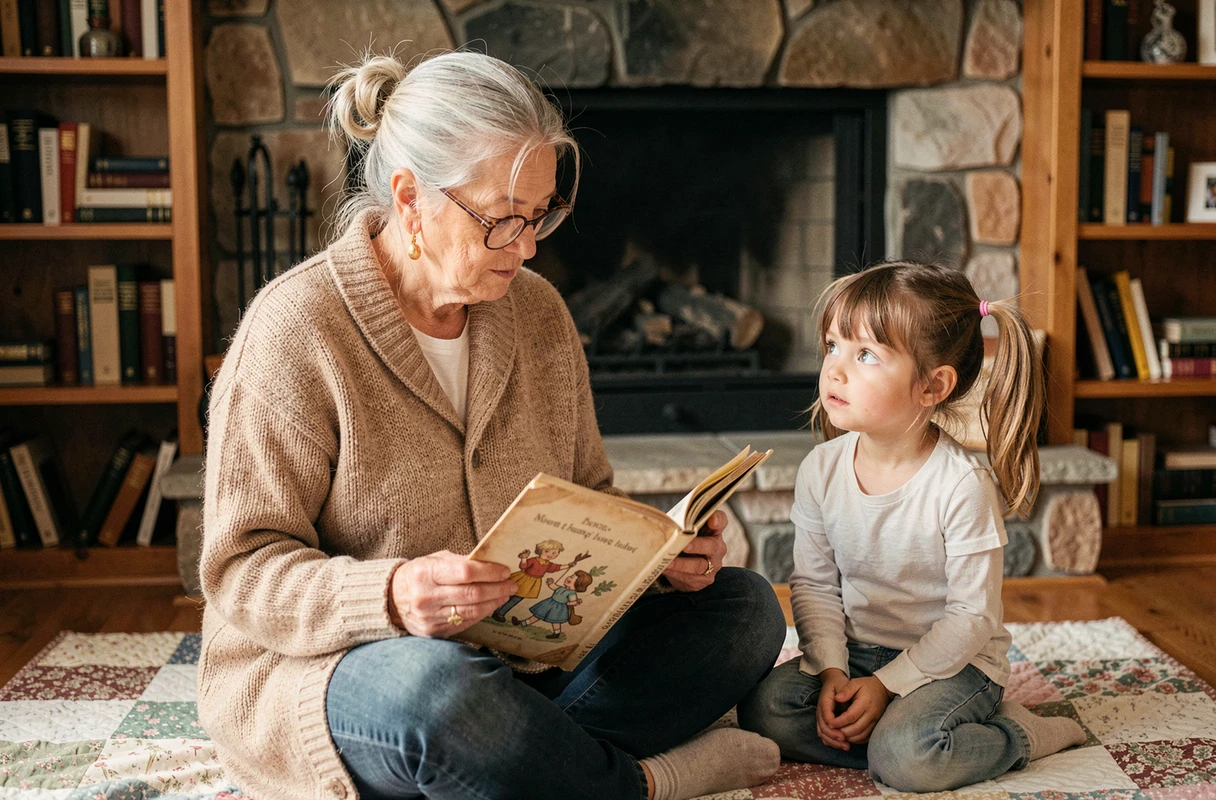
There are dozens of different versions of this nursery rhyme available online. No identified author, no known creation date: the nursery rhyme belongs to pure oral tradition.
This absence of a canonical text is reflected even in the spelling. Search results indiscriminately display “rabbit skin,” “rabbit’s skin,” or “rabbit skin.” Each variant reflects how an adult once transcribed what they heard in a schoolyard or leisure center.
What oral transmission concretely changes
When a nursery rhyme is passed down without written support, each link in the chain adds, removes, or modifies a word. This phenomenon is observed in several French regions, where additional verses vary from one school to another. Feedback on this point varies, as some teachers report entirely new versions that have spontaneously appeared in their classrooms.
This ambiguity is not a flaw. It is part of the normal functioning of popular nursery rhymes. The plasticity of the text ensures its longevity: each generation appropriates it without feeling like they are reciting something old.
Nursery rhyme hands up and gesture games: the mechanism that anchors memory
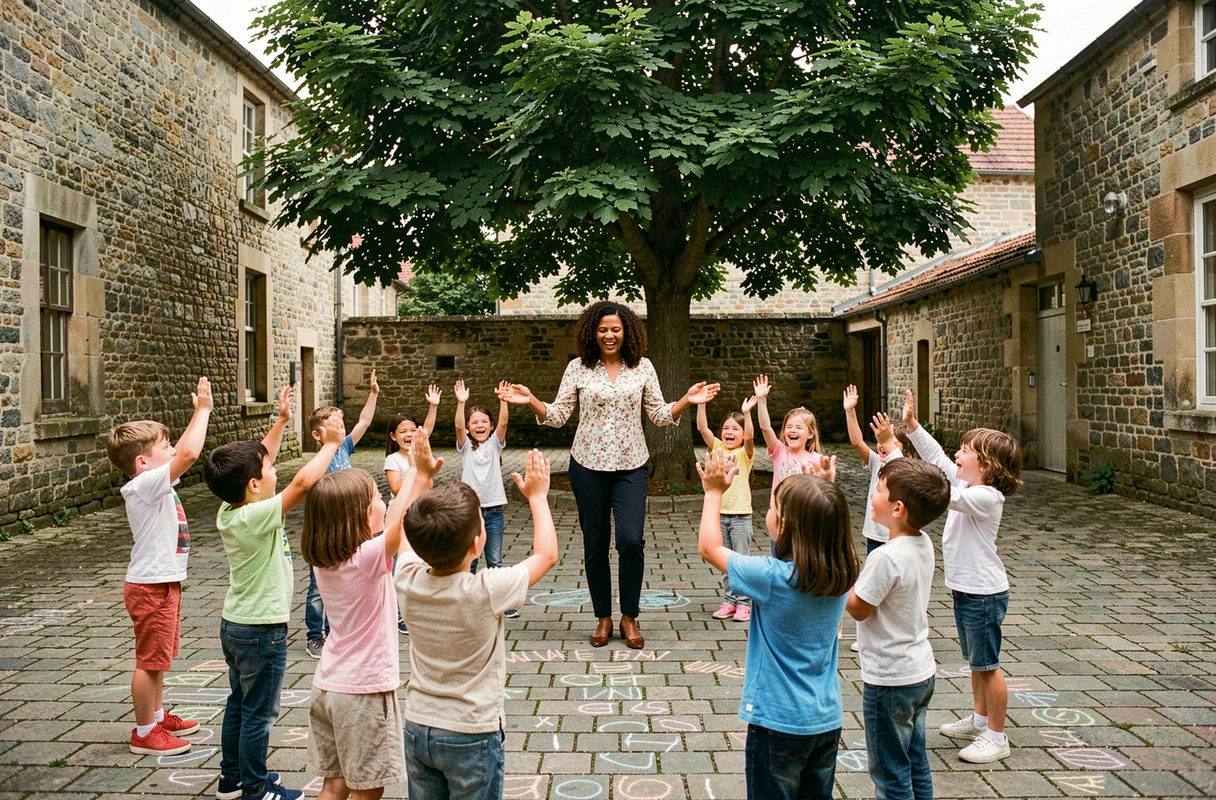
What distinguishes this nursery rhyme from many others is the systematic association between words and gestures. The “hands up” triggers a precise movement, arms raised above the head. Depending on the versions, the following lines command other actions: touch your knees, clap your hands, spin around.
- The gesture of hands in the air comes right from the first line, immediately capturing the group’s attention
- The word-gesture sequence engages motor coordination, a fundamental learning in preschool
- The binary rhythm (a phrase, a gesture) facilitates memorization even among very young children
In class or at a leisure center, the nursery rhyme serves as a tool for refocusing. An animator who shouts “hands up” achieves silence and attention in a matter of seconds, because the gestural reflex takes over before reflection even kicks in.
Nursery rhyme rabbit skin in current popular culture
The phrase has largely transcended the realm of playgrounds. The title has been used as the name of an episode of the animated series Tony and Alberto, aired on French television. This type of reuse shows that the expression remains a culturally recognizable marker for a wide audience, both children and adults.
On digital platforms aimed at young parents, the nursery rhyme appears in compilations of baby songs, animated nursery rhyme videos, and downloadable educational materials. It has found a second life in the digital parenting universe, where it shares space with “Au clair de la lune” or “Une souris verte” without any hesitation.
A special status among French nursery rhymes
Unlike nursery rhymes whose author or creation period is known, “hands up rabbit skin” resists any attempt at precise dating.
Its effectiveness relies on three combined elements: a percussive rhythm, absurd vocabulary, and a universal gesture. Removing one of the three would collapse the whole. It is this combination that explains why the nursery rhyme transcends generations without aging, even though no one really knows who invented it or when it first appeared.