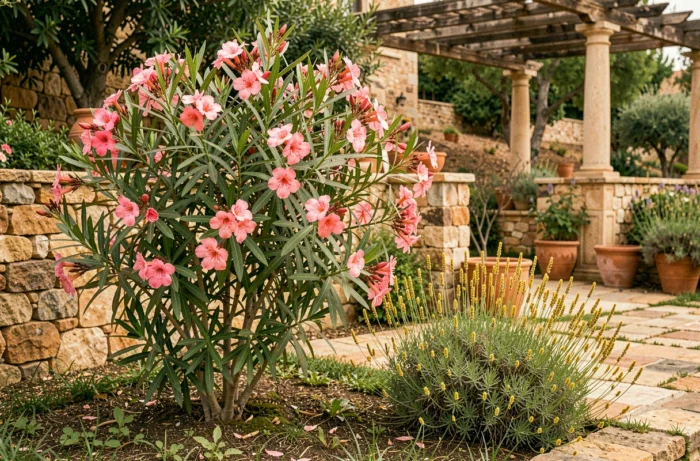
The oleander attracts attention with its generous clusters of flowers, but its roots and foliage impose specific constraints on neighboring plants. Some associations may seem logical on paper but turn out to be problematic in practice, whether due to soil incompatibility, contamination risk, or root competition. Knowing which plants to avoid near the oleander is essential for protecting both the aesthetics of the flowerbed and the health of the garden.
Oleander Pruning Waste: A Danger to Neighboring Plants
Have you ever pruned an oleander and left the cut branches on the ground for a few days? This seemingly harmless act poses a real problem. The pruning residues contain toxic substances that persist even after drying. If these fragments decompose at the base of other plants, they can contaminate the soil and surrounding plants.
The risk is particularly high for edible plants. Salads, strawberries, and herbs like basil or chives: all these crops absorb elements from the soil through their roots. A piece of oleander leaf decomposing nearby is enough to render the harvest unfit for consumption.
This point also applies to compost. Adding oleander trimmings to a compost bin intended for the vegetable garden means spreading toxicity throughout the garden. Never compost Nerium oleander pruning waste if you use the compost for food crops. To learn more on Jardiner Facile, the root system of this shrub also plays a role in the associations to avoid.
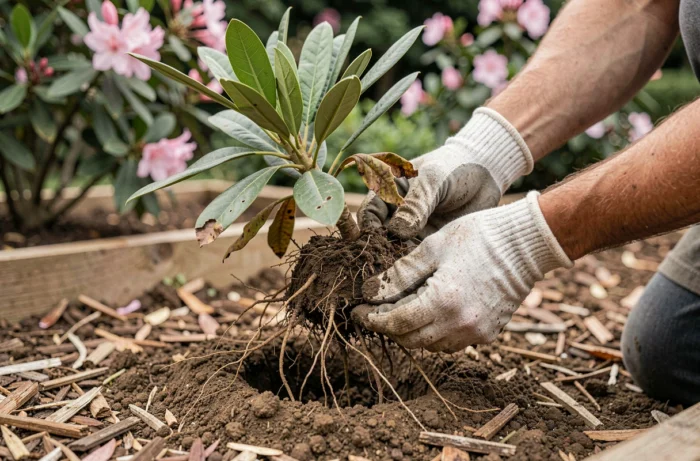
Vegetable Garden and Herbs: Edible Plants to Keep Away from Oleander
This is the first rule to remember. No plant intended for consumption should grow within two meters of an oleander. The reason is not only due to pruning waste but also to runoff water that can carry toxic residues to neighboring crops.
Mediterranean herbs like thyme, rosemary, or sage share the same sunlight and well-drained soil requirements as oleander. Therefore, they are often planted nearby out of habit. This is a mistake if you plan to use them in cooking.
Particular Case of Cutting Water
If you propagate your oleanders by cuttings in water, that water also becomes toxic. Cutting water should never be used to water other plants, especially not seedlings or young potted plants. Place the cutting containers far from the growing areas and empty them in a location where no edible plants are growing.
The list of edible plants to avoid planting near an oleander includes:
- Salads and leafy vegetables (lettuce, spinach, arugula), which easily absorb substances from the soil through their shallow roots
- Strawberries and creeping small fruits, often planted at the edge of a bed within direct reach of the oleander’s roots
- Culinary herbs (basil, parsley, mint, chives), which tend to be tucked into any available space in the garden
- Tomato or pepper plants potted right next to an oleander in a container on a terrace
Acidophilic Plants and Moist Soils: A Cultural Incompatibility with Oleander
Beyond toxicity, oleander imposes very specific soil conditions. This shrub thrives in full sun, in well-drained and rather neutral to calcareous soil. Planting species that require acidic or constantly moist soil at its feet condemns one or the other to struggle.
Hydrangeas are a classic example. They need cool, humus-rich, and slightly acidic soil. Next to an oleander that withstands drought and poor soils, the watering needed for hydrangeas risks causing excess moisture at the base of the Nerium oleander, promoting fungal diseases.
Azealeas, Camellias, and Rhododendrons
The same observation applies to heathland plants. Azaleas, camellias, and rhododendrons require acidic pH, partial shade, and soil that retains moisture. Oleander prefers exactly the opposite. Associating them in the same bed forces compromises in watering and soil amendment that satisfy neither party.
Ferns, hostas, and astilbes, often used to fill the bases of shrubs, pose the same problem. These shade and moisture-loving plants wither in full sun in well-drained soil. The base of an oleander is not a space to fill with just any ground cover.
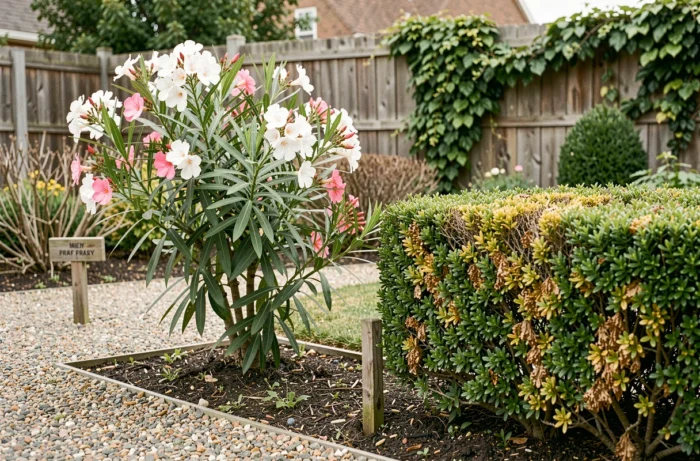
Oleander and Bay Laurel: Avoiding Confusion in the Garden
Planting a bay laurel right next to an oleander increases the risk of confusion, especially if children or visitors frequent the garden. Both shrubs have elongated, dark green leaves that look quite similar to an untrained eye.
Bay laurel (Laurus nobilis) is edible and used in cooking. Oleander (Nerium oleander) is toxic in all its parts: leaves, flowers, sap, wood. Confusing an oleander leaf with bay laurel can cause serious poisoning.
If you want to grow both, physically separate them in well-defined areas of the garden. Avoid placing them in the same bed or against the same wall. Ideally, install them in spaces that do not visually intersect, so that harvesting bay laurel never becomes an automatic gesture near the Nerium oleander.
What Plants Work Near Oleander
Rather than filling a bed by elimination, it’s better to start from shared needs. Good neighbors for oleander enjoy direct sunlight, tolerate drought, and are content with well-drained, even poor soil.
- Ornamental grasses like stipa or pennisetum add movement without competing with the roots of the oleander
- Gaura and lavender share the same dry soil and full sun requirements, with complementary blooms
- Agapanthus offers an effective color contrast while thriving under the same growing conditions
The principle remains simple: each neighboring plant must survive without additional watering and without acidic amendments. If you need to modify the soil for a plant to accept growing next to the oleander, it does not belong in that bed.