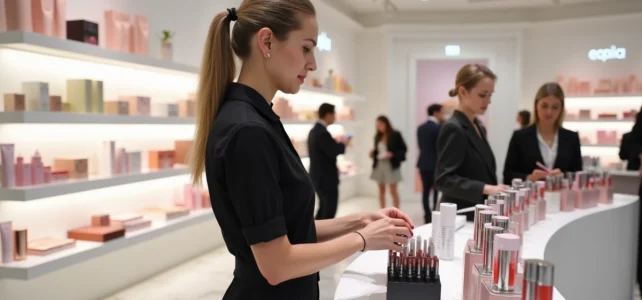
The French selective beauty market is no longer just a duel between Sephora and Marionnaud. Several brands and distribution models are exploiting strategic gaps that Sephora struggles to fill, particularly regarding the pricing policy of prestige perfumes, the integration of technological diagnostics in-store, and attracting a clientele sensitive to niche brands.
Beauty Success: the pricing policy that destabilizes Sephora in prestige perfumes
Beauty Success is the least commented competitor in mainstream analyses, yet it is the most troubling for Sephora in a specific segment: high-end perfume. The brand combines a network of perfumeries-institutes with a catalog that includes houses like Chanel, Dior, Guerlain, YSL, and Lancôme, while also referencing trendy or niche brands (Garancia, Beauty of Joseon) often absent from Sephora.
What sets Beauty Success apart is a pricing policy that is consistently lower than Sephora’s on prestige perfumes, a gap accentuated by aggressive promotional mechanics. Customer feedback collected by EDP Nutrition confirms this recurring pricing advantage over Sephora, Nocibé, and Marionnaud.
For a broader mapping, we observe that Sephora’s main competitors differentiate themselves less by the breadth of their catalog than by their ability to create a perceived advantage in a specific segment. Beauty Success has understood this by targeting perfume, where Sephora’s margins are most exposed.
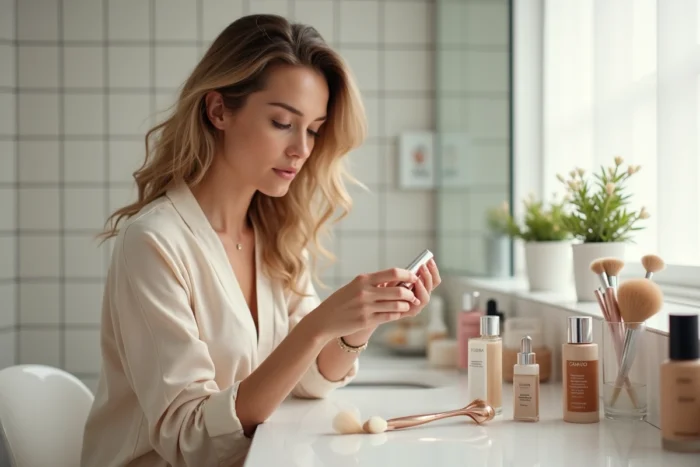
AI Diagnostics and In-Store Personalization: the technological ground where Sephora is no longer alone
Artificial intelligence applied to skin and makeup diagnostics is reshaping the customer experience in perfumeries. Sephora was a pioneer with its shade tools and interactive kiosks. Several competitors are catching up, and some are surpassing Sephora on specific points.
L’Oréal, through its brands and retail partnerships, is deploying AI-powered facial diagnostic modules directly in partner stores. These tools analyze skin texture, wrinkles, and pigmentation spots and propose a personalized routine in real-time. Technology is no longer confined to Parisian flagships: it is moving into mid-market distribution networks.
What personalization changes in the shopping journey
An in-store AI diagnostic alters the relationship with beauty advice. The customer arrives with an algorithmic recommendation, which shifts the role of the advisor towards validation and upselling rather than discovery. For Sephora’s competing brands, this is a more powerful loyalty lever than a points card.
- The AI skin diagnostic reduces the return rate on facial care, as the product better matches the customer’s actual needs.
- The algorithmic personalization of makeup (foundation shade, undertone) removes a major barrier to online purchasing.
- The data collected during the diagnostic feeds into the brand’s CRM and allows for targeted follow-ups on product renewals.
The brand that masters in-store diagnostics captures customer data before Sephora. This is a sustainable competitive advantage because this data enriches every subsequent interaction.
Niche Brands and Clean Beauty: the territory that Nocibé and beauty boxes are contesting with Sephora
Sephora has long been the gateway to niche brands in France. This monopoly is crumbling. Nocibé is expanding its offerings to include Korean brands and clean beauty lines that appeal to a younger clientele. Beauty boxes (Blissim, My Little Box) have created a parallel discovery channel that bypasses the in-store experience.
The beauty box model transforms product discovery into a recurring subscription. The customer receives a targeted selection each month, often composed of emerging brands that do not yet have the means to pay for Sephora listing. This channel has allowed brands like Typology or Respire to build awareness even before entering traditional circuits.
Yves Rocher: the underestimated competitor by reflex
Yves Rocher maintains a territorial network that Sephora cannot replicate, with points of sale in catchment areas where no selective brand ventures. Its pricing position, image of naturalness, and base of loyal customers make it a structural competitor, not a temporary one.

KIKO and MAC: the makeup specialists capturing the TikTok generation
KIKO Milano and MAC Cosmetics do not have the depth of Sephora’s catalog in skincare or perfumes. However, in color makeup, they exert direct pressure. KIKO attracts with a very low pricing position on trendy products, with a rapid collection renewal modeled after fast fashion cycles.
MAC maintains a professional credibility that Sephora Collection struggles to match. Makeup artists remain influencers on social media, and MAC benefits from organic visibility on TikTok and Instagram that advertising money cannot buy. NYX, owned by L’Oréal, occupies a similar niche with an even lower entry price.
- KIKO renews its collections every few weeks, a pace that Sephora cannot match with its own brand.
- MAC maintains a professional image through collaborations with artists and studios.
- NYX targets beginner customers with integrated tutorials and accessible packaging.
These three brands do not seek to replace Sephora. They capture part of the makeup budget before the customer enters a Sephora store. The most dangerous competitor is not the one selling the same thing, but the one intercepting the customer upstream.
The competitive landscape for Sephora in France is no longer read as a list of brands ranked by revenue. It reads like a map of friction points: the price of perfumes at Beauty Success, the customer data captured by AI diagnostics, product discovery diverted by beauty boxes, the makeup budget absorbed by KIKO and MAC. Each competitor nibbles away at a specific piece of the shopping journey, and it is this fragmentation that poses the real strategic challenge.