
The average mobile data consumption in France now reaches about 18.4 GB per month per subscriber according to ARCEP, while many Orange plans offer packages ranging from 50 to 300 GB. The gap between what customers actually consume and what they pay deserves regular monitoring. How can one accurately measure their mobile internet consumption with Orange, and above all, what to do with this data once collected?
Gap Between Subscribed Package and Actual Consumption with Orange
Mobile data traffic is expected to grow by about 9% per year by 2026, compared to 13% in previous years. Growth is slowing, but the plans sold remain largely oversized for most users.
| Usage Profile | Estimated Monthly Consumption | Typical Subscribed Orange Plan | Unused Data |
|---|---|---|---|
| Web browsing, emails, social media | 5 to 10 GB | 50 GB | 40 to 45 GB |
| Audio streaming, occasional video | 15 to 25 GB | 100 GB | 75 to 85 GB |
| Intensive video streaming, tethering | 40 to 80 GB | 150 to 300 GB | 70 to 220 GB |
This table illustrates a point that Orange’s consumption tracking tools do not highlight: the majority of subscribers pay for gigabytes they will never use. Monitoring consumption is not only about avoiding overages but also about identifying an overly generous plan.
To delve deeper into this topic, find information on Orange internet consumption that details the available consultation methods.
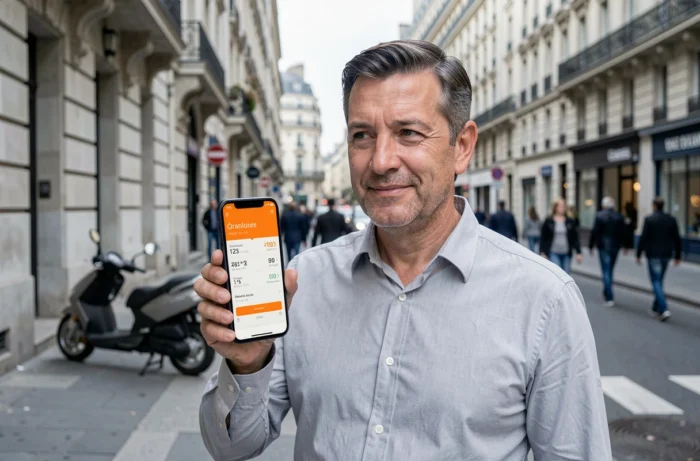
Orange Consumption Tracking Tools: App, Customer Space, and USSD Codes
Orange offers three main channels to check mobile internet consumption. Each has notable differences in terms of accuracy and update frequency.
Orange and Me App
The mobile app displays current consumption directly from the home screen. A visual gauge indicates the percentage of the data package used. Overage notifications can be configured.
The tracking updates several times a day. However, the displayed consumption may lag a few hours behind actual usage, especially when roaming.
Web Customer Space
From a computer, the “Consumption Tracking” section followed by “Mobile Internet” provides access to a more detailed history. It includes breakdowns by period and comparisons with previous months.
The customer space remains the only channel to offer a consolidated view when multiple mobile lines are linked to the same account.
USSD Code and Call to 555
The code #123# or calling 555 provides an instant summary of consumption. Both methods work without a data connection, making them useful when the plan is exhausted or the speed is reduced.
- Orange and Me App: near real-time visual tracking, threshold notifications, accessible outside Wi-Fi
- Web Customer Space: complete history, multi-line view, monthly comparison
- Code #123# or call 555: consultation without data, immediate result via SMS or voice message
- Airbox 4G+: consultation only through the dedicated admin interface, not from the regular customer space
Native Android and iOS Tracking vs. Orange Tracking
The operating systems of smartphones include their own data counters. The question arises: do these tools replace Orange’s consumption tracking?
Android Counter
In Android’s network settings, the “Data Usage” section details consumption by application. This counter helps identify which application consumes the most (video streaming, automatic updates, cloud synchronization).
The Android counter does not reset automatically on the plan renewal date. It must be manually reset each month to obtain usable measurements.
iOS Counter
On iPhone, the “Cellular Data” section in settings displays total and per-application consumption. As on Android, the counter reset remains manual.
Unlike Orange’s tracking, native counters do not know your plan limit. They measure a gross volume without relating it to a cap. Their main interest lies in identifying the most data-hungry applications, not in tracking the remaining balance.

Exceeding Data Consumption: What Happens at Orange
When the mobile internet package is fully consumed, Orange applies a speed reduction or a block, depending on the type of plan. There is no automatic overcharging per gigabyte on current consumer plans.
The reduced speed generally drops to a level that makes streaming and downloading unusable, but still allows for basic text browsing and messaging. This operation differs from some operators who completely cut off data access.
There are two options to restore normal speed before the end of the cycle:
- Recharge data via the Orange and Me app or customer space (purchase of a one-time data pass)
- Change the plan for the current cycle, with immediate effect in most cases
- Wait for the automatic renewal of the package on the plan’s anniversary date
Regularly monitoring consumption allows for anticipating this situation. A subscriber who consumes 80% of their package in the middle of the cycle knows they will need to adjust their usage or plan for a recharge.
Adjusting Your Orange Plan to Your Actual Consumption
The slowdown in mobile data traffic growth in France suggests that actual needs are stabilizing. A subscriber who notices month after month that they use less than half of their package is paying for an oversized plan.
Orange’s consumption tracking, combined with smartphone counters, provides the necessary data to downgrade without risking overages. Three months of history is enough to identify a reliable consumption ceiling.
The issue is not technical. The tools exist and work properly. The challenge is behavioral: regularly consulting this data transforms a subscription from a burden into an informed choice. A plan adjusted to actual consumption is often the first lever for savings on the mobile bill.